
Shaffer, Peter: 1926-2016
Amadeus, 1979 - Before Reading (AI Created)
- Before reading Amadeus it helps to know that the play is not a strictly accurate biography. It is a dramatic exploration of genius, jealousy, faith, and ambition, built around a famous rivalry.
- 1. The basic story
The play is narrated by Antonio Salieri, an older composer who claims responsibility for the downfall of Wolfgang Amadeus Mozart.
Historically, there is little evidence that Salieri murdered Mozart or actively destroyed him. Shaffer uses this rumor as a way to explore deeper questions:
- Why are some people extraordinarily gifted?
- What happens when a hardworking person encounters a genius?
- Can someone love art and still resent its creator?
Example: Imagine spending your entire life training to become the best pianist in your city. Then a teenager arrives and effortlessly plays better than you. You admire their talent, but you also feel envy. Salieri experiences a version of this feeling with Mozart. - 2. Mozart was a real musical genius
Mozart is one of the most celebrated composers in history.
Some famous works include:
- The Marriage of Figaro
- Don Giovanni
- The Magic Flute
- Requiem
In the play, Mozart's music is portrayed as almost divine—something beyond ordinary human ability.
Example: A modern comparison might be a young programmer who writes groundbreaking software while seeming to break all the usual rules and expectations. - 3. Salieri represents ordinary excellence
Shaffer's Salieri is talented, disciplined, respected, and successful.
The tragedy is that he realizes Mozart is operating at a level he can never reach.
Example: Think of a top Olympic athlete who discovers a competitor with abilities that seem almost superhuman. The athlete remains excellent, but excellence suddenly feels inadequate. - 4. Religion is a major theme
Salieri believes he has made a bargain with God:
- He will live a virtuous life.
- God will reward him with musical greatness.
When Mozart appears, Salieri feels betrayed.
Example: A student studies diligently for years expecting to become valedictorian, only to watch someone else achieve more while appearing careless. The student's frustration may become directed not only at the rival but at the fairness of the system itself. - 5. Mozart in the play is unusual
Shaffer presents Mozart as:
- Brilliant
- Childlike
- Crude
- Immature
- Socially awkward
This contrast is important because Salieri cannot understand why such sublime music comes from someone who behaves so foolishly.
Example: Imagine hearing the most beautiful symphony ever written and then discovering its creator tells bad jokes and laughs constantly. That contradiction fascinates Salieri. - 6. The setting: Vienna in the late 1700s
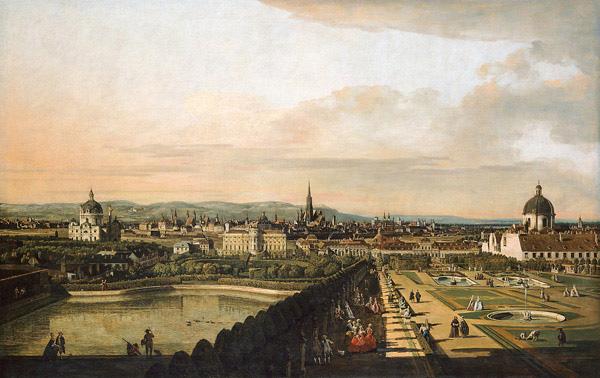
Vienna was one of Europe's cultural centers.
Important figures include:
- Joseph II
- Aristocrats who sponsored musicians
- Court composers competing for recognition
Why it matters
Success depended not only on talent but also on:
- Politics
- Reputation
- Patronage
- Social connections - 7. Watch for the idea of "mediocrity"
One of the play's most famous ideas is Salieri's fear of being ordinary.
He realizes he is good—but not great.
Key question while reading
- Is it worse to have no talent at all, or to have enough talent to recognize someone else's greatness?
This question drives much of the drama. - 8. Historical fact vs. dramatic fiction
Mozart and Salieri were real people - Their intense personal rivalry is exaggerated
Mozart died young - Salieri's role in his death is fictionalized
Both were respected composers - The conflict becomes a philosophical battle
Mozart wrote masterpieces - His genius is portrayed almost as a supernatural gift - 9. Main themes to look for
Genius vs. hard work
Envy and jealousy
Faith and doubt
Art and creativity
Success vs. greatness
The search for meaning
If you keep these themes in mind, Amadeus becomes much more than a story about composers—it becomes a study of what it feels like to witness greatness and what that does to a person's sense of self.
- 1. The basic story