
Shaw, George Bernard: 1856-1950
Saint Joan, 1923 - Before Reading (AI Created)
- Before reading Saint Joan it helps to understand the history, politics, religion, and Shaw's unique style.
- 1. Joan of Arc Was a Real Person
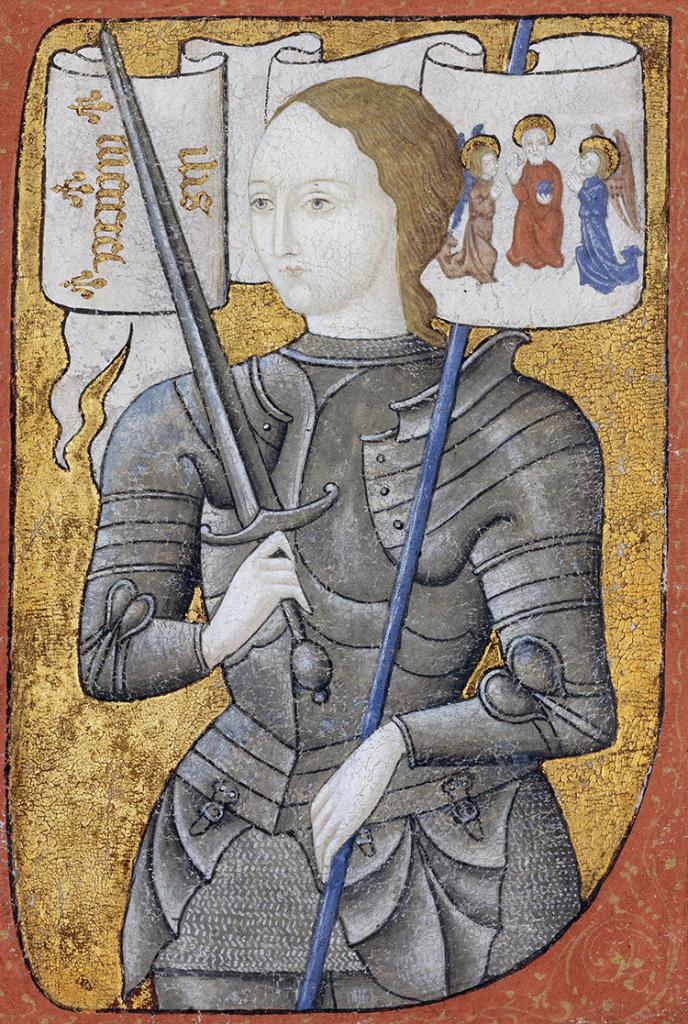
Joan of Arc (1412–1431) was a French peasant girl who claimed to hear messages from saints telling her to help save France.
She:
- Led French troops during the Hundred Years' War.
- Helped lift the Siege of Orléans.
- Helped place the French king on the throne.
- Was captured, tried for heresy, and executed at age 19.
Example from the play:
When Joan insists that God speaks directly to her, other characters must decide whether she is a saint, a visionary, or a dangerous rebel. - 2. The Hundred Years' War Was Happening
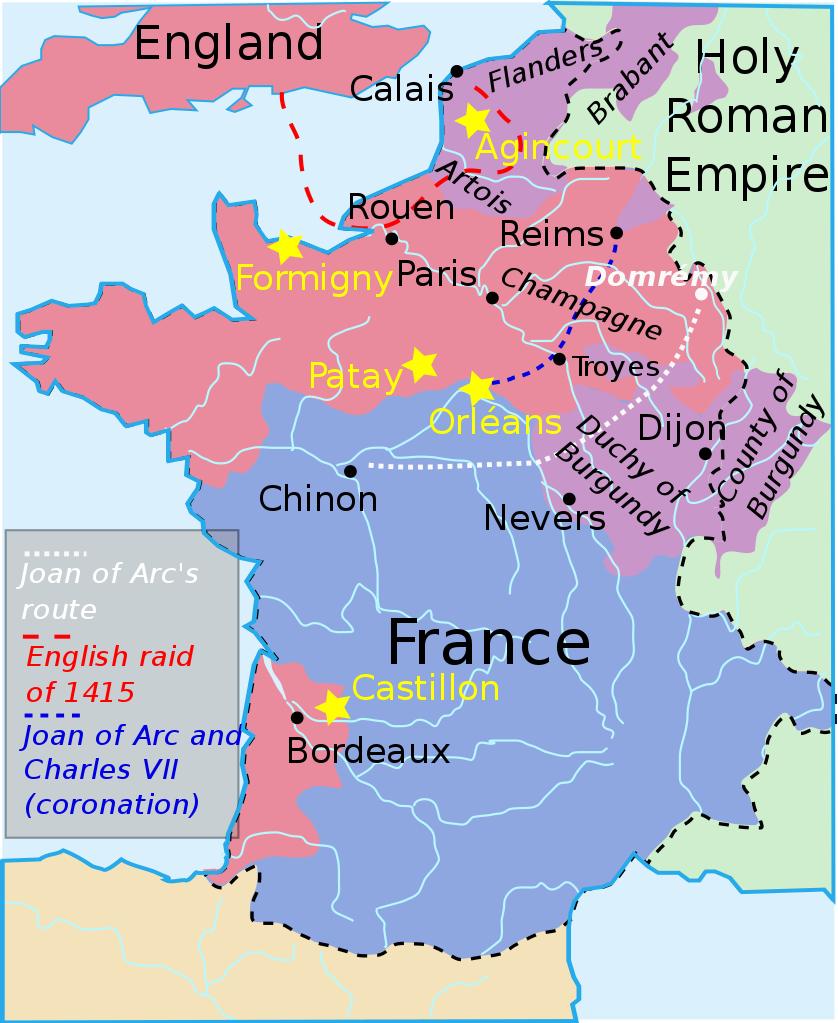
The play takes place during part of the Hundred Years' War.
England controlled large parts of France and claimed the French crown.
Example:
- At the start of the play, many French nobles are discouraged and divided. Joan arrives believing France can win despite the odds. - 3. Religion Was the Center of Life
In medieval Europe:
- The Church influenced politics, law, education, and daily life.
- Religious authority was rarely questioned.
- Claiming direct communication with God could be seen as dangerous.
Example:
- Joan says she follows God's voice rather than church officials. This creates conflict because authority normally flowed through the Church. - 4. Joan's "Voices" Are Central
Many people today ask:
- Was Joan mentally ill, inspired, or genuinely receiving divine guidance?
Shaw deliberately avoids giving a simple answer.
Example:
- Joan confidently reports messages from saints. The audience must decide how to interpret her experiences.
Reading tip:
- Focus less on whether the voices are "real" and more on how society reacts to them. - 5. Shaw Does Not Write Simple Villains
Many versions of Joan's story portray her enemies as evil.
Shaw does something different.
Example:
- The church leaders and judges often present reasonable arguments. They believe they are protecting social order and religious unity.
This makes the play more complex because:
-Joan is admirable.
-Her opponents are often sincere.
-Tragedy comes from conflicting beliefs. - 6. The Play Is About Individual Conscience vs Institutions
This is probably the most important theme.
Joan trusts her own judgment.
Institutions—government, church, military—value obedience and stability.
Example:
- When Joan refuses to submit completely to authority, institutions see her independence as a threat.
Modern parallel:
- A whistleblower challenging a large organization.
- A scientist defending an unpopular discovery. - 7. Shaw Saw Joan as a Modern Hero
Shaw admired people who challenge accepted ideas.
To him, Joan was not just a medieval saint.
She represented:
- Independent thinking
- Courage
- Innovation
- Social change
Example:
- Joan often sees possibilities that experienced leaders fail to see. - 8. Nationalism Is an Important Theme
Joan helped create a stronger sense of French national identity.
Before her, loyalty was often local or feudal.
Example:
- She speaks about France as a united nation rather than a collection of territories ruled by competing nobles.
This idea feels modern but was unusual at the time. - 9. Joan Was Executed for More Than One Reason
Historically, Joan was charged with heresy.
But political concerns also played a role.
She threatened:
- English power
- Church authority
- Established social structures
Example:
- In the play, multiple groups have reasons to fear her influence. - 10. The Play Was Written Nearly 500 Years Later
George Bernard Shaw wrote the play in 1923.
His audience had recently experienced:
- World War I
- Political revolutions
- Challenges to traditional authority
Example:
- Many discussions in the play feel surprisingly modern because Shaw uses Joan's story to explore contemporary questions about power and change. - 11. Joan Was Later Declared a Saint
After her execution:
- Her conviction was overturned.
- She became a national heroine.
- She was canonized by the Catholic Church in 1920.
Example:
- One irony of the play is that institutions condemn Joan while she is alive but celebrate her after she is dead.
Shaw repeatedly highlights this paradox. - 12. Pay Attention to Shaw's Humor
Many readers expect only tragedy.
Instead, Shaw includes wit, irony, and sharp debate.
Example:
- Characters often make intelligent, even funny arguments while discussing very serious matters.
Reading the play as a series of debates rather than a straightforward historical story can make it much more enjoyable. - 13. The Ending Is Unusual
Without giving away details, Shaw adds material beyond the historical events themselves.
Example:
- The final scenes encourage readers to think about how societies treat extraordinary people:
- While they are alive
- After they become famous
- After they become symbols - 14. Key Question to Keep in Mind While Reading
Ask yourself:
- "If Joan appeared today, would people recognize her genius—or would they reject her just as her contemporaries did?"
This question lies at the heart of Shaw's play and connects medieval history to the modern world.
- 1. Joan of Arc Was a Real Person