
Wyndham, John: 1903-1969
The Day of the Triffids, 1951 - Before Reading (AI Created)
- Before reading The Day of the Triffids, it helps to understand the social background that shaped the story.
- 1. It is a post-apocalyptic story
The novel begins after a catastrophe leaves most people unable to see.
Example: Imagine waking up one morning and discovering that nearly everyone in your city has suddenly gone blind. Everyday systems—transportation, hospitals, food supplies—would quickly break down. - 2. The "Triffids" are not ordinary plants
Triffids are large, mobile, dangerous plants that can harm humans.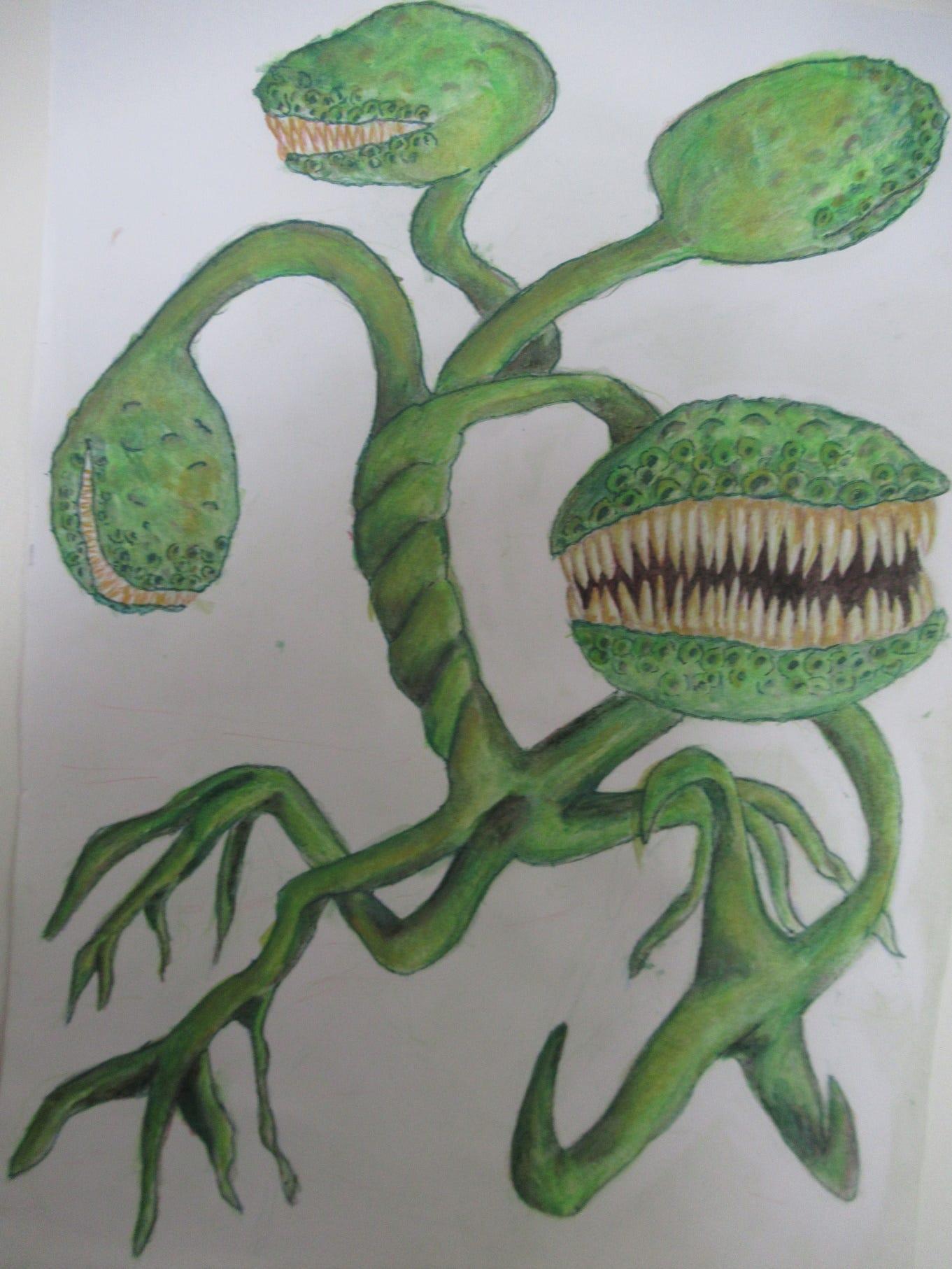
Example: Instead of a tree staying rooted in one place, imagine a tall plant that can move across fields and attack people. - 3. The book mixes science fiction with survival drama
The story is not only about strange plants; it is also about how people rebuild society after disaster.
Example: Characters must find food, safe shelter, and trustworthy allies while civilization collapses around them. - 4. It reflects fears of the mid-20th century
Written in 1951, the novel was influenced by concerns about science, war, and global catastrophe.
Example: Readers of the time worried about how a single worldwide event could suddenly change life for everyone, e.g. fear that a new world war or a scientific disaster (atom bomb) could affect the entire planet at once. - 5. The science is less important than the ideas
Some scientific explanations may feel dated today. Think about why almost everyone becomes - to modern readers, the scientific explanation may seem vague or unlikely because we now know much more about astronomy, radiation, and eye injuries.
Example: Rather than focusing on whether the Triffids are scientifically realistic, pay attention to the questions the story asks about human dependence on technology and social order. - 6. The main threat is not only the Triffids
Human reactions to disaster become just as important as the plants.
Example: Scarcity, fear, and competition can create dangers even when monsters are not present. - 7. The novel helped shape modern apocalypse fiction
Many later books, films, and television series use ideas that resemble this novel.
Example: Stories where a catastrophe destroys normal society and survivors must form new communities owe something to works like this one. - 8. Expect a thoughtful pace rather than nonstop action
The book spends time exploring consequences and social issues.
Example: Instead of constant battles, you may read discussions about leadership, cooperation, morality, and rebuilding civilization. - 9. Three Questions to Think About
How dependent is society on a few critical systems?
What would happen if most people suddenly lost an essential ability such as sight?
Would the greatest danger come from the disaster itself, from the Triffids, or from human behavior?
Keeping these questions in mind will make many of the novel's themes easier to recognize as you read.
- 1. It is a post-apocalyptic story